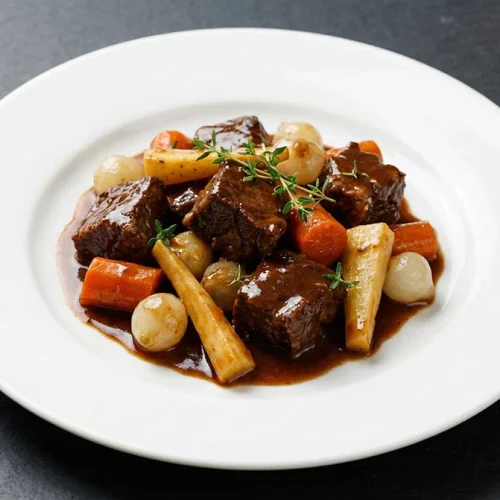
Classic Beef Ragoût with Root Vegetables
The pursuit of a truly exceptional Ragoût is a testament to culinary patience and understanding. It’s not merely about combining ingredients; it’s about orchestrating a transformation. While lesser preparations might rush this process, yielding tough meat and a watery sauce, the classic method, as we’ll explore, coaxes profound depth and silken texture from humble beginnings. This is where budget friendly cuts ascend to gastronomic royalty, a victory of technique over expense.
Our objective is a dish where the beef doesn’t just yield to the fork it dissolves, leaving behind a whisper of richness. The sauce, far from being a mere accompaniment, becomes an integral part of the experience, naturally thickened by the very essence of the meat. This is the art of the slow braise, a patient alchemy that rewards diligence with unparalleled comfort and flavour.
Mastering this ragoût means understanding that time is your most valuable ingredient. It’s about allowing the connective tissues in the beef to break down slowly, releasing their gelatinous magic into the braising liquid. This principle, the very heart of ‘The Collagen Breakdown,’ elevates a simple stew into a masterpiece, proving that the most luxurious results often come from the most considered approaches.
Instructions
Initiating the Foundation: Building Flavor and Texture
Begin by preheating your oven to a precise 325°F (160°C). This controlled, moderate heat is essential for the slow, even cooking that will transform humble beef into a meltingly tender masterpiece. Next, take your beef cubes and, using paper towels, meticulously pat them thoroughly dry. This critical step ensures proper moisture removal, which is paramount for achieving that coveted deep, mahogany sear. A wet surface will steam the meat, preventing the Maillard reaction – the very process responsible for developing complex, savory flavors and that beautiful golden brown crust.
In a substantial Dutch oven or a heavy bottomed pot, heat a combination of olive oil and butter over medium high heat until it shimmers, but before it begins to smoke. Working in sensible batches, carefully sear the beef cubes, ensuring you do not crowd the pot. Overcrowding will lower the pan’s temperature, leading to steaming rather than searing. Allow each piece to develop a rich, uniform brown on all sides. Once properly seared, remove the beef to a waiting plate, reserving any precious rendered juices.
Developing the Aromatic Core and Braising Liquid
Reduce the heat to medium and introduce your finely diced onions to the pot. Sauté them, stirring with purpose, until they soften and become translucent, a process that should take approximately 5 to 7 minutes. As they cook, actively scrape the bottom of the pot to loosen any browned bits – the fond – that have adhered. This is pure flavor gold. Add the minced garlic and continue to cook for just one minute more until its intoxicating aroma fills the air; be vigilant to prevent it from scorching, as burnt garlic is acrid.
Now, evenly sprinkle the flour over the softened aromatics. Stir constantly for 1 to 2 minutes, cooking the flour to eliminate any raw taste and to begin the thickening process. Next, deglaze the pot with a generous pour of red wine. Bring this to a lively simmer, employing your spoon to vigorously scrape the bottom and incorporate all those deeply flavorful browned bits into the liquid. Allow the wine to reduce by half, concentrating its flavor and alcohol content.
The Art of the Slow Braise and Harmonizing Flavors
Return the seared beef, along with any accumulated juices from the plate, back into the pot. Pour in the beef stock, add the diced tomatoes, fresh thyme sprigs, bay leaf, and season judiciously with salt and pepper. Stir everything to ensure the beef is fully submerged; for maximum collagen release and a naturally thickened sauce, ensure your beef cubes are uniformly cut and completely submerged throughout the braising process. This technique allows the connective tissues to break down into gelatin, creating a luxurious texture. Bring this magnificent mixture to a gentle simmer on the stovetop before tightly covering the Dutch oven and transferring it to your preheated oven.
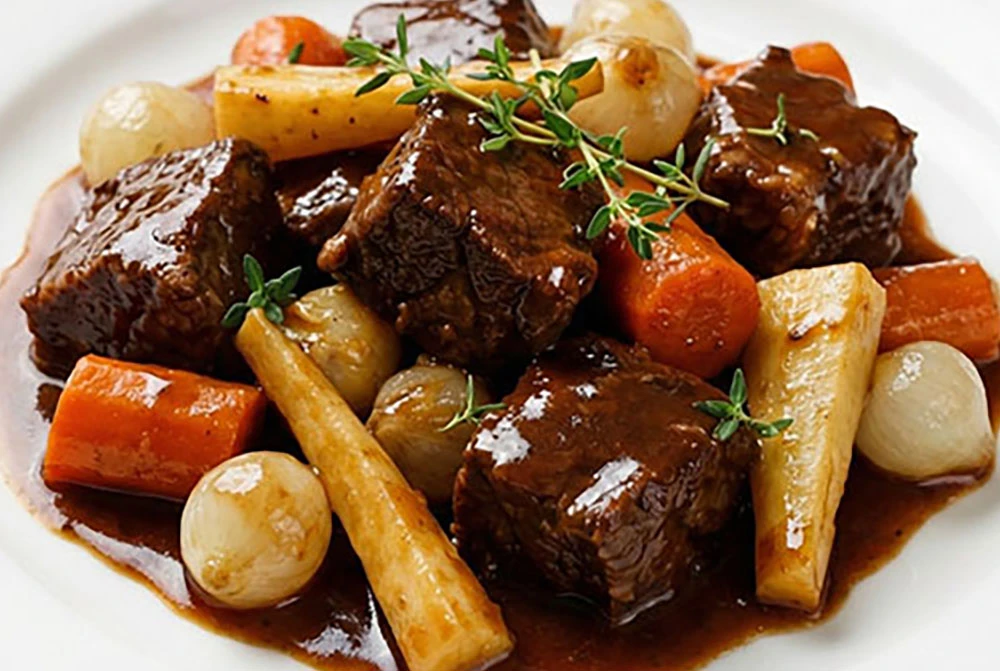
Braise for a full hour. After this initial period, carefully remove the pot from the oven and stir in the diced carrots, parsnips, and potatoes, ensuring they too are submerged in the rich liquid. Return the covered pot to the oven and continue to braise for an additional 1.5 to 2 hours, or until the beef yields effortlessly to the touch of a fork and the vegetables are tender. The sauce should have thickened considerably, a testament to the collagen breakdown. Remove and discard the bay leaf and thyme sprigs. Finally, taste and adjust the seasoning as needed. Serve this magnificent ragoût piping hot, perhaps garnished with fresh parsley, alongside crusty bread or creamy polenta for a truly satisfying meal. Storage: Allow the ragoût to cool completely before refrigerating in an airtight container for up to 3 days. It often tastes even better the next day.
The Chef’s Science
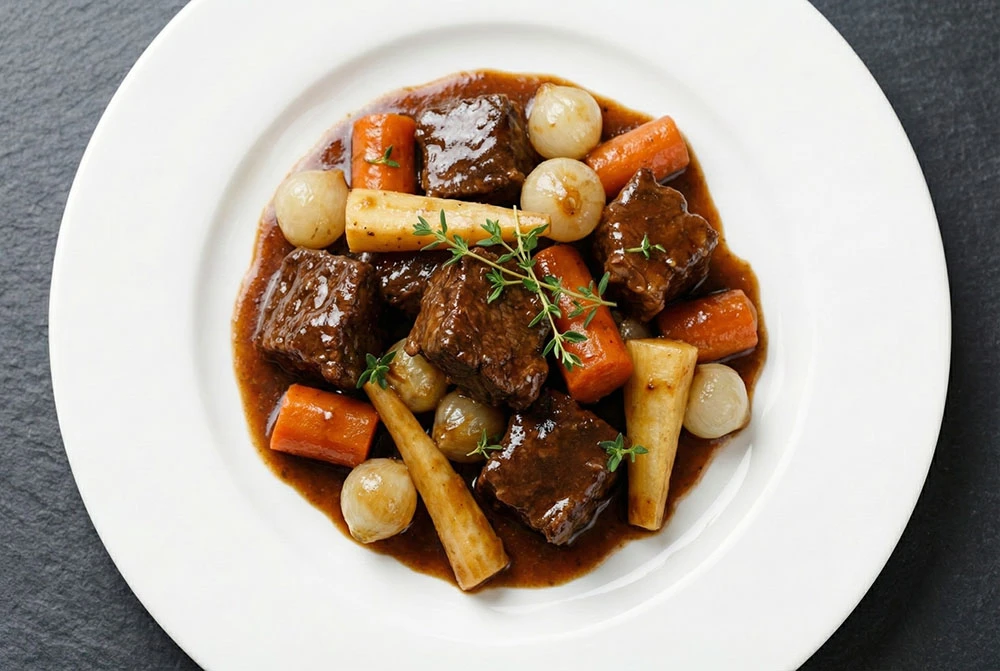
The cornerstone of this ragoût’s luxurious texture lies in a process we call ‘The Collagen Breakdown,’ a direct application of slow heat chemistry. Beef chuck, a cut prized for its robust flavour and economical nature, is rich in connective tissue, primarily collagen. When subjected to low, consistent heat over an extended period, as in our oven braise, this collagen undergoes a remarkable transformation. It gradually hydrolyzes, breaking down into gelatin. Gelatin is what gives the ragoût its signature unctuous mouthfeel and naturally thickens the sauce without the need for excessive starches. This gelatinization is precisely why the beef becomes fork tender and the sauce coats the palate so beautifully, a testament to patience and the inherent properties of the meat itself.
Sourcing the Best
For this ragoût, the quality of your beef is paramount. Opt for ‘beef chuck’ that has been trimmed of excess hard fat but retains good marbling those fine streaks of intramuscular fat. This marbling will render during the slow braise, adding moisture and flavour, and contributing to the overall richness. Look for a deep, ruby red colour, indicating freshness. When it comes to tomatoes, choose high-quality canned diced tomatoes. Seek out brands packed in their own juice, preferably San Marzano or similar Italian varieties, known for their balanced sweetness and lower acidity. This ensures a vibrant, flavourful base for our sauce.
Classic Beef Ragoût with Root Vegetables
Ingredients
For the Ragoût
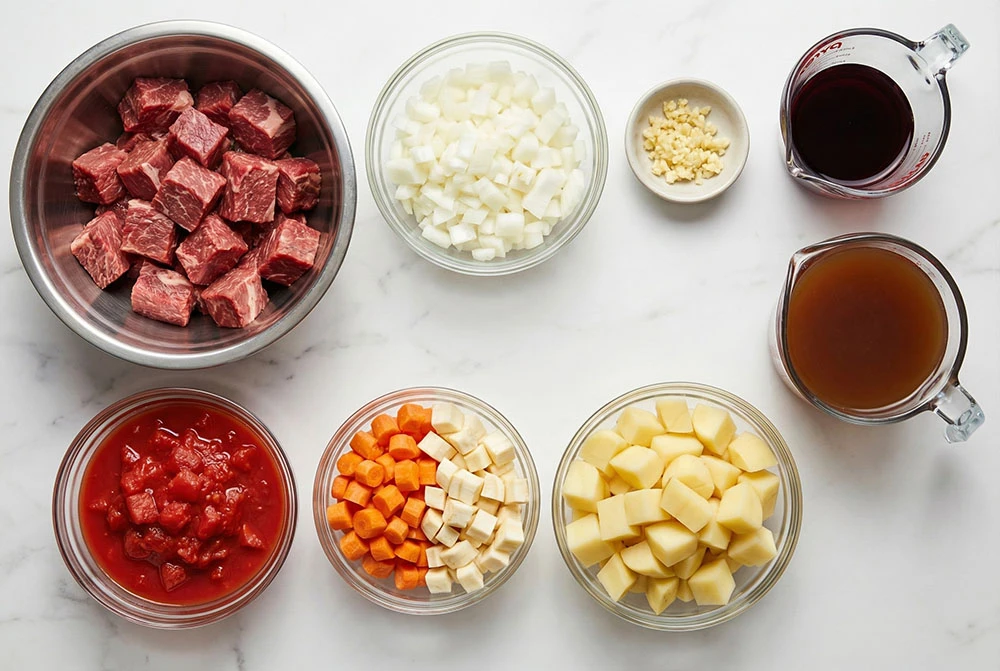
- 2.5 lb Beef chuck trimmed of excess fat and cut into 1/2-inch uniform cubes
- 2 tbsp Olive oil extra virgin
- 1 tbsp Butter unsalted
- 2 medium Yellow onions finely diced (brunoise)
- 3 cloves Garlic minced
- 2 tbsp All-purpose flour
- 1 cup Dry red wine such as Pinot Noir or Merlot
- 4 cups Beef stock low sodium, high quality
- 1 14.5 oz can Diced tomatoes, undrained
- 2 sprigs Fresh thyme
- 1 Bay leaf
- 1 tsp Kosher salt or to taste
- 1/2 tsp Freshly ground black pepper or to taste
For the Root Vegetables
- 2 medium Carrots peeled and cut into 1/2-inch uniform dice
- 2 medium Parsnips peeled and cut into 1/2-inch uniform dice
- 1 lb Small Yukon Gold potatoes scrubbed and cut into 1/2-inch uniform dice
For Garnish (Optional)
- Fresh parsley chopped
Instructions
- Preheat your oven to 325°F (160°C).
- Pat the beef cubes thoroughly dry with paper towels. This is crucial for achieving a proper sear.
- Heat the olive oil and butter in a large Dutch oven or heavy bottomed pot over medium high heat. Sear the beef in batches, ensuring not to crowd the pot, until deeply browned on all sides. Remove the seared beef to a plate and set aside.
- Reduce the heat to medium. Add the finely diced onions to the pot and cook, stirring frequently, until softened and translucent, about 5-7 minutes. Scrape up any browned bits (fond) from the bottom of the pot.
- Add the minced garlic and cook for 1 minute more until fragrant, being careful not to burn it.
- Sprinkle the flour over the onions and garlic. Cook, stirring constantly, for 1-2 minutes to cook out the raw flour taste.
- Deglaze the pot by pouring in the red wine. Bring to a simmer, scraping vigorously to loosen all the browned bits from the bottom. Let the wine reduce by half.
- Return the seared beef (and any accumulated juices) to the pot. Add the beef stock, diced tomatoes, thyme sprigs, bay leaf, salt, and pepper. Stir to combine. The liquid should fully submerge the beef.
- Bring the mixture to a gentle simmer on the stovetop. Once simmering, cover the Dutch oven tightly and transfer it to the preheated oven.
- Braise for 1 hour. After 1 hour, carefully stir in the diced carrots, parsnips, and potatoes. Ensure the vegetables are fully submerged in the liquid.
- Return the covered pot to the oven and continue to braise for another 1.5 to 2 hours, or until the beef is fork tender and the vegetables are cooked through. The sauce should have thickened considerably due to the collagen release from the beef.
- Remove the bay leaf and thyme sprigs. Taste and adjust seasoning with salt and pepper as needed.
- Serve hot, garnished with fresh parsley if desired. This ragoût is excellent served with crusty bread or over creamy polenta.
Notes
Plating & Presentation
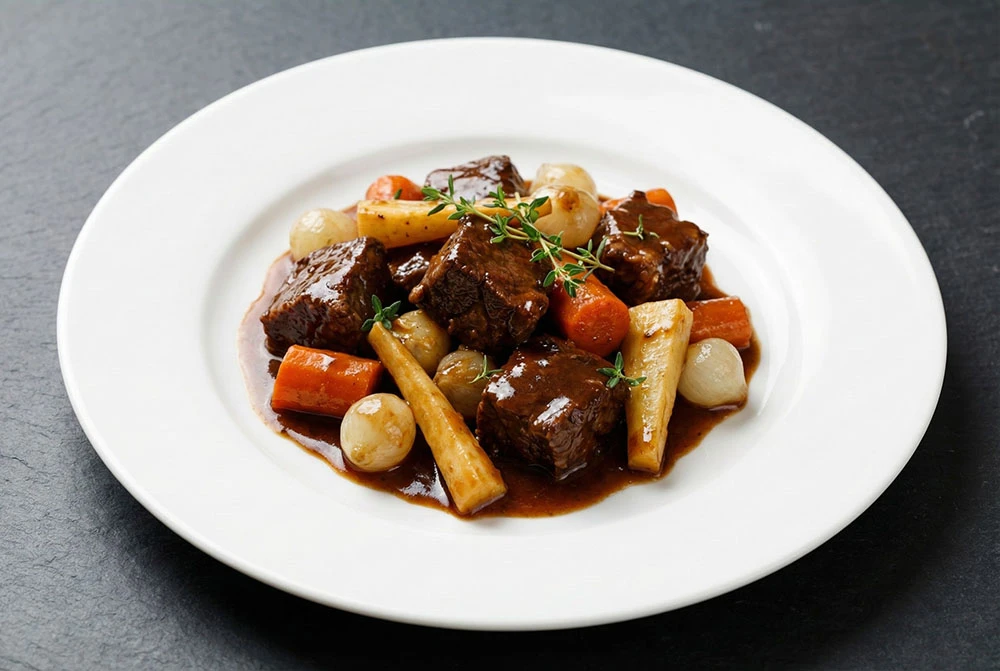
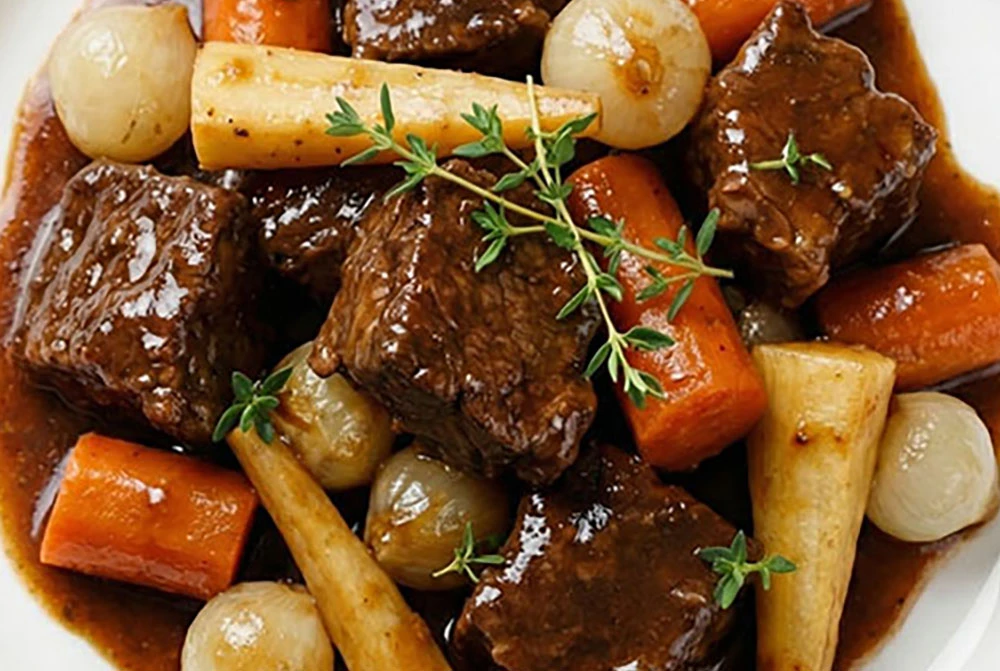
To serve this ragoût with the elegance it deserves, begin by gently warming the stew to ensure a perfect eating temperature. Ladle a generous portion into the center of a shallow, warm white ceramic bowl or plate. Use the back of the ladle to artfully spread the ragoût, ensuring an even distribution of beef and vegetables. For a touch of colour and freshness, sprinkle a small amount of finely chopped fresh parsley over the top. If any sauce has splashed onto the rim of the plate, meticulously wipe it clean with a damp linen cloth. The goal is a pristine presentation that highlights the rich textures and colours of the dish, inviting the diner to experience its comforting depth.